Web: www.comeflywithfish.com -- E-Mail: fish@flyingwithfish.com
13/11/2008 – InsideTrip.com : Booking Your Flights Based On On-Time Statistics
Very often when I choose my flight schedule I try and find out a flight's on-time performance. In the past finding much of this information required me to use two or three web sites. While gathering this information is important, it could be cumbersome.
Using a new web site InsideTrip (www.insidetrip.com), which is still in its 'Beta Stage,' I am now able to have this information easily at my fingertips. Not only does InsideTrip show display the on-time statistics, it also displays the average security wait times for the flight, the load factor of the flight, and other valuable information.
Why is knowing the on-time statistics of flights so important to me? This information allows me to make educated decisions on the creation of complex itineraries, with minimal unnecessary time on the ground.
Obviously there are many unexpected factors that can come into play, such as weather, accidents, the occasional Union going on strike in Europe, but what I am looking for is the overall performance of the flight.
While looking up an itinerary for a business traveler in New York, who only needs 2 hours in Central London, this information allows me to quickly create a very short trip for this flyer. This business traveler will be flying between New York's JFK to London Heathrow (LHR) on November 24th, returning on the afternoon of November 25th. The following is the information gathered for this trip on InsideTrip in just under 45 seconds:
--OUT-BOUND--
Date: 11/24/2008
Flight: Virgin Atlantic/VS 4
Depart: New York/JFK (JFK)@ 6:10pm EST
Arrive: London/Heathrow (LHR) @ 6:20am GMT
Travel Time: 7hrs 10min
On-time States: Fairly Reliable / 70% On-Time
Security Wait: 8 minutes average
Aircraft: Airbus A340-600 (346)
Legroom: 55" (Business Class)
Average Age of Fleet: 3 Years
Load Factor: Fairly Full / 82%
--IN-BOUND--
Date: 11/25/2008
Flight: Virgin Atlantic/VS 45
Depart: London/Heathrow (LHR) @ 2:00pm GMT
Arrive: New York/JFK (JFK) @ 5:05pm EST
Travel Time: 8hrs 05min
On-time States: Less Reliable / 49% On-Time
Security Wait: n/a
Aircraft: Airbus A340-600 (346)
Legroom: 55" (Business Class)
Average Age of Fleet: 3 Years
Load Factor: Fairly Full / 82%
With this information found on InsideTrip, in under 45 seconds, I am fairly certain my client can get into Central London by 8:30am via the Heathrow Express and get back to Heathrow by 11:30am to check in, via the Heathrow Express.
While the return flight is only on-time 49% of the time, for this itinerary, what is most important is that the JFK-LHR flight is on-time 70% of the time (using other resources to view the last 10 days of actual departure/arrival times I can see that even if the flight is an hour late, this flyer should still be safe to get to their meeting by 8:30am GMT)
So, next time you're checking your flights, why not head over to www.insidetrip.com and check out this information for yourself.
Happy Flying!
Showing posts with label JFK Airport. Show all posts
Showing posts with label JFK Airport. Show all posts

05 July 2008
Watching The World Go By
Web: www.fishfoto.com -- E-Mail: fish@flyingwithfish.com
5/07/2008 - Watching The World Go By
As I sit here in seat 22A, on a United Airlines red-eye flight between San Francisco (SFO) and Philadelphia (PHL), I often can't help but watch the world go by. It's not because I am forced to sit in a window seat on 99% of my flights, because obviously I usually have the option of choosing my seat.
As I began my journey from the west coast to the east coast tonight (my fourth flight in 3 days and my second transcontinental flight in two days), our plane lifted off into a clear sky, through a dense fog (that blocked many in San Francisco from viewing the evening's fireworks display), and as we climbed out and United Flight 188 was handed off from 'NorCal Departure' to the next Air Traffic Control (ATC) Tower the sky opened up again. Through a clear black sky I can see for hundreds of miles, from small pockets of light indicating a small town surrounded by emptiness to sprawling cities and endless clusters of lights.
The view from an airplane view can be monotonous. On long flights over the oceans you see nothing but water for hours at a time. Sometimes you'll see another plane in and can watch it pace you, pass you, or go in its own direction. However there are scenes of beauty you can never see from the ground, the colours of a sunrise or sunset dancing on the tops of clouds. The view of a full moon over the North Pole is breath taking, as is watching the sunrise and set over the polar ice cap.
The anticipation of flying to a destination near the coast and seeing the first glimpse of land and of course, the best view of watching your hometown come into view.
When I depart certain runways from New York's JFK I still have the same sense of giddiness when I can look down and spot where I grew up on, or the see the beach I was spend all my childhood summers on. On approaches into JFK and LaGuardia (LGA) I can enjoy the skyline I grew up in the shadow of from a vantage point that is unlike any others. I look forward to flying certain routes into Providence (PVD) that hug the Connecticut Shoreline as I can look out and often spot the town I am raising my kids in below me, this lets me know I'll be home soon.
So as I muse about watching the world go by, and how much I enjoy watching the landscape, the terrain, the awesome beauty of watching the Grand Canton pass by at sunset and the spectacle of the twinkling lights of Las Vegas after dark, one thing stays in the front of my mind.......
..........the best view is that of watching my home come into sight because the best flight is always the one that brings you home.
Happy Flying!
5/07/2008 - Watching The World Go By
As I sit here in seat 22A, on a United Airlines red-eye flight between San Francisco (SFO) and Philadelphia (PHL), I often can't help but watch the world go by. It's not because I am forced to sit in a window seat on 99% of my flights, because obviously I usually have the option of choosing my seat.
As I began my journey from the west coast to the east coast tonight (my fourth flight in 3 days and my second transcontinental flight in two days), our plane lifted off into a clear sky, through a dense fog (that blocked many in San Francisco from viewing the evening's fireworks display), and as we climbed out and United Flight 188 was handed off from 'NorCal Departure' to the next Air Traffic Control (ATC) Tower the sky opened up again. Through a clear black sky I can see for hundreds of miles, from small pockets of light indicating a small town surrounded by emptiness to sprawling cities and endless clusters of lights.
The view from an airplane view can be monotonous. On long flights over the oceans you see nothing but water for hours at a time. Sometimes you'll see another plane in and can watch it pace you, pass you, or go in its own direction. However there are scenes of beauty you can never see from the ground, the colours of a sunrise or sunset dancing on the tops of clouds. The view of a full moon over the North Pole is breath taking, as is watching the sunrise and set over the polar ice cap.
The anticipation of flying to a destination near the coast and seeing the first glimpse of land and of course, the best view of watching your hometown come into view.
When I depart certain runways from New York's JFK I still have the same sense of giddiness when I can look down and spot where I grew up on, or the see the beach I was spend all my childhood summers on. On approaches into JFK and LaGuardia (LGA) I can enjoy the skyline I grew up in the shadow of from a vantage point that is unlike any others. I look forward to flying certain routes into Providence (PVD) that hug the Connecticut Shoreline as I can look out and often spot the town I am raising my kids in below me, this lets me know I'll be home soon.
So as I muse about watching the world go by, and how much I enjoy watching the landscape, the terrain, the awesome beauty of watching the Grand Canton pass by at sunset and the spectacle of the twinkling lights of Las Vegas after dark, one thing stays in the front of my mind.......
..........the best view is that of watching my home come into sight because the best flight is always the one that brings you home.
Happy Flying!
04 July 2008
Why Can't I Fly When I Want To Fly?
Web: www.fishfotoworldwide.com -- E-Mail: fish@flyingwithfish.com
4/07/2008 - Why Can't I Fly When I Want To Fly?
A question commonly asked by travelers is "Why can't I fly when I want to fly?"
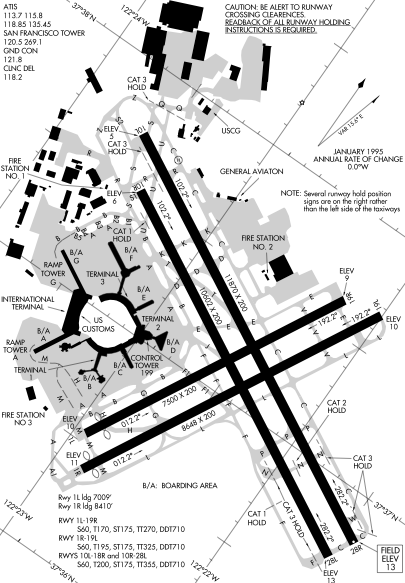
As I sit here on a wall, on the edge of the San Francisco Bay, looking out over San Francisco (SFO) Int'l Airport's tandem runways (28L/28R) watching the early morning west coast-to-east coast transcontinental flights line up and depart I decided this was a good time to answer this question.
In the past month I have received a number of e-mails from photographers seeking to find out why they can't fly certain routes at certain times of the day that are convenient to them. I'm not sure why there has been an influx of this question, but clearly this is a question on many people's minds.
In reality there are dozens of answers to this question depending on each individual scenario. But in many cases the reason why people cannot fly when they want to fly has to do with two factor
1) Length of Flight
2) Time-Zone Shifts
When airlines plan their routes they have to account for simple factors such as departure and arrival time. A good example of this is flights between New York's JFK (JFK) and London's Heathrow (LHR). For travelers there are only two times of the day you can fly this route, between 7:30am and 9:00am or between 6:00pm and 11:30pm. Conversely for those seeking to fly from Heathrow back to JFK they can depart nearly all day long from 8:30am until 8:05pm with flight never really more than 90 minutes apart.
Why can you only go to London in the early morning or the evening and return all day? Simple, it involves traveling with the time zones. If you depart JFK at 10:00am you'll arrive at 10:00pm, which is why many business travelers often fly out around 6:00pm or 7:00pm to arrive in the morning at the start of the business day. These times are because you are flying east, which are 'against' the time-zones.
When you fly 'against' a time zone is when you are flying in a direction that adds time to your day. If you depart JFK at 8:30am, it is already 1:30pm at LHR. The average flight time between JFK and LHR is 7hrs 30min (flight times depends on the type of aircraft flown, such as 777-200 takes 7hrs 25min while a 757-200 may take 8hrs, then you factor in the airline's 'blocked flight time', etc etc). So if you're 8:30am departure is really a "1:30pm departure" puts you in at 9:00pm, or approx 12hr 30min after you departed instead of 7hrs 30min after you departed.
If an airline were to offer a 2:00pm flight between JFK and LHR you'd arrive around 2:00am the following day. This would mean passengers would arrive in a closed airport with no service between the airport and the city, leaving passengers stranded for 3 hours waiting for the airport to open again.
The return flights are easier to manage because flights headed west are flying "with the time zone." A flight departing LHR at 8:30am arrives at a reasonable 11:00am and an 8:00pm departure also arrives at a reasonable 10:30pm
If you watch airports departures during the day you see a shift in 'tails' and aircraft routes throughout the day. Yesterday at SFO looking out I noticed the Japan/China/Korea flights all depart in clusters, right around the same time the Paris/Amsterdam/Dublin/Frankfurt/London flights arrive in the afternoon. Around this time you starts watching the north-south traffic and 'mid-continent' flights increase. It is not random that the majority of the airlines flying certain routes operate on very similar schedules. These airline are all fighting the same forces of 'linear time & time-zones." An airline's schedule must not only meet passenger needs, but also the logical need to depart and arrive within a practical time period.
I won't get into the factor of the international dateline combines with time zones but I will say this......I always love flying from Nagoya, Japan (NGO) to Honolulu, Hawaii (HNL) and landing 12 hours before I have taken off (aren't time zones and the international date line fun?).
.................Keep this in mind when you fly from New York's JFK to Los Angeles' LAX on a business trip and have a multitude of options in the morning, but get frustrated when you're trying to book a late afternoon flight from LAX back to JFK and you can't find any flights available.
.........and for no reason at all, at the end of the post is a photo I shot from the wall I am sitting on of a Northwest Airlines Airbus A319 climbing out off of SFO's Runway 28L in front of the San Francisco skyline
Happy Flying!
--Click Image To Enlarge It--

4/07/2008 - Why Can't I Fly When I Want To Fly?
A question commonly asked by travelers is "Why can't I fly when I want to fly?"
As I sit here on a wall, on the edge of the San Francisco Bay, looking out over San Francisco (SFO) Int'l Airport's tandem runways (28L/28R) watching the early morning west coast-to-east coast transcontinental flights line up and depart I decided this was a good time to answer this question.
In the past month I have received a number of e-mails from photographers seeking to find out why they can't fly certain routes at certain times of the day that are convenient to them. I'm not sure why there has been an influx of this question, but clearly this is a question on many people's minds.
In reality there are dozens of answers to this question depending on each individual scenario. But in many cases the reason why people cannot fly when they want to fly has to do with two factor
1) Length of Flight
2) Time-Zone Shifts
When airlines plan their routes they have to account for simple factors such as departure and arrival time. A good example of this is flights between New York's JFK (JFK) and London's Heathrow (LHR). For travelers there are only two times of the day you can fly this route, between 7:30am and 9:00am or between 6:00pm and 11:30pm. Conversely for those seeking to fly from Heathrow back to JFK they can depart nearly all day long from 8:30am until 8:05pm with flight never really more than 90 minutes apart.
Why can you only go to London in the early morning or the evening and return all day? Simple, it involves traveling with the time zones. If you depart JFK at 10:00am you'll arrive at 10:00pm, which is why many business travelers often fly out around 6:00pm or 7:00pm to arrive in the morning at the start of the business day. These times are because you are flying east, which are 'against' the time-zones.
When you fly 'against' a time zone is when you are flying in a direction that adds time to your day. If you depart JFK at 8:30am, it is already 1:30pm at LHR. The average flight time between JFK and LHR is 7hrs 30min (flight times depends on the type of aircraft flown, such as 777-200 takes 7hrs 25min while a 757-200 may take 8hrs, then you factor in the airline's 'blocked flight time', etc etc). So if you're 8:30am departure is really a "1:30pm departure" puts you in at 9:00pm, or approx 12hr 30min after you departed instead of 7hrs 30min after you departed.
If an airline were to offer a 2:00pm flight between JFK and LHR you'd arrive around 2:00am the following day. This would mean passengers would arrive in a closed airport with no service between the airport and the city, leaving passengers stranded for 3 hours waiting for the airport to open again.
The return flights are easier to manage because flights headed west are flying "with the time zone." A flight departing LHR at 8:30am arrives at a reasonable 11:00am and an 8:00pm departure also arrives at a reasonable 10:30pm
If you watch airports departures during the day you see a shift in 'tails' and aircraft routes throughout the day. Yesterday at SFO looking out I noticed the Japan/China/Korea flights all depart in clusters, right around the same time the Paris/Amsterdam/Dublin/Frankfurt/London flights arrive in the afternoon. Around this time you starts watching the north-south traffic and 'mid-continent' flights increase. It is not random that the majority of the airlines flying certain routes operate on very similar schedules. These airline are all fighting the same forces of 'linear time & time-zones." An airline's schedule must not only meet passenger needs, but also the logical need to depart and arrive within a practical time period.
I won't get into the factor of the international dateline combines with time zones but I will say this......I always love flying from Nagoya, Japan (NGO) to Honolulu, Hawaii (HNL) and landing 12 hours before I have taken off (aren't time zones and the international date line fun?).
.................Keep this in mind when you fly from New York's JFK to Los Angeles' LAX on a business trip and have a multitude of options in the morning, but get frustrated when you're trying to book a late afternoon flight from LAX back to JFK and you can't find any flights available.
.........and for no reason at all, at the end of the post is a photo I shot from the wall I am sitting on of a Northwest Airlines Airbus A319 climbing out off of SFO's Runway 28L in front of the San Francisco skyline
Happy Flying!
--Click Image To Enlarge It--

02 July 2008
Anatomy Of An Airport Security Checkpoint
Web: www.fishfotoworldwide.com -- E-Mail: fish@flyingwithfish.com
2/07/2008 - Anatomy Of An Airport Security Checkpoint
I frequently discuss topics related to airport security on Flying With Fish, however this morning as I crossed the security checkpoint at New York's JFK International Airport Terminal 7, having been awake for just under 22 hours, I realized some infrequent flyers who read this site may not know the details of a security check point. What caused me to have this revelation? It is the fact that each morning at JFK Terminal 7, as the TSA Security Screening Checkpoint opens, right around 4:45am, chaos erupts in the terminal.
The security line normally starts at the doors to enter the screening process and tends to end at the back of the terminal, usually wrapping around the corner just a bit. As the line slowly moves tensions seem to rise as passengers cut the line; private security boarding pass checkers never utters a single word to you as they grab at the boarding pass in your hand seemingly without rhyme or reason; the single line gets split into two lines; airport staff rapidly darts through the passengers and cut the line to jump to the front of the line; "CLEAR Card" users start filtering to the direct front of line........then you meet the ID checker. Today the TSA ID Checker demanded that each passenger declare their "3-1-1" bags and she visually inspected them before sending people down the line to the actual security check point (I declared I had no "3-1-1" bag, I didn't feel like taking my backpack off twice, as it is not the ID Checkers job to inspect your baggage or ask to see the contents of your 3-1-1 bag).
After collecting my shoes, baseball hat, the camera that was on my shoulder, stuffing my "3-1-1" bag into my backpack, stuffing my laptop back into my backpack and throwing my camera belt/pouch system over my shoulder, I looked back at a long line of very confused passengers. I'd have to think if I didn't deal with airport security on a regular basis and I was faced with all this confusion at 4:45am, with no one explaining the process, I’d probably get a little frazzled.
In reality nearly all airport security checkpoints around the world are quite uniform in the process of security procedures.
So in the simplest terms the following is 'The Anatomy Of An Airport Security-Screening Checkpoint.'
1) The Line Up -- The Line Up is simple. It is where passengers begin to line up to enter the security-screening checkpoint. You only enter the security-screening checkpoint once you have your boarding pass (yes, I have seen people get all the way through the line only to be turned away because they forgot to pick up their boarding pass).
2) The Barker -- 'The Barker' is the security person who walks up and down the line 'barking' that you should have your boarding pass and valid photo identification out and available for inspection, that your laptop should be out of your bag for x-ray inspection and that you are only entitled to only pass through security with no more than 3oz of liquids in each container, these containers must be in one single 1-quart bag and only one bag per person (hence '3-1-1' bag). These people may also split a single line into two lines, ask to see you boarding pass and at times just intimidate inexperienced travelers.
3) The ID Checker -- This is the security person at the 'entrance' to the actual screening process. This person inspects your photo identification (usually a passport or drivers license) and your travel documents to make sure your name/face match those on your boarding pass.
4) The Long Table -- The actual x-ray and metal detector process usually begins with a long table with plastic bins. This is where you remove your shoes (if required); your laptop (if required); your 3-1-1 bag (now virtually universal at all security). You also want to start making sure you have no metal on you, this means place your coins, keys, mobile phone, etc in a secure pocket, or inside one of your bags.
5) The Bins -- Every 'Long Table' has 'The Bins.' 'The Bins' are where you'll place your shoes, jacket, laptop and other lose items. For tips on how to easily get through the x-ray process you can view my segment on ABC News' Good Morning America here : Flying With Fish On Good Morning America.
6) The X-Ray Scanner -- At the end of the 'Long Table" is the X-Ray Scanner and its conveyor belt. You want to place your bags and bins in the X-Ray scanner. Remember that bins go in vertically NOT horizontally. Make sure you witness your bags entering the X-Ray scanner before proceeding to the next step, and from that moment never take your eyes off the 'exit' of the x-ray scanner! Also remember to keep your boarding pass out and in your hand, do not place that through with your bags and bins.
7) The Metal Detector -- Once your bags and bins are in the x-ray scanner (and your boarding pass is in your hand!) you'll line up for the metal detector. Always wait outside the metal detector until the security personnel have motioned for you to pass through the metal detector. Before passing through pat yourself down to check for any metal items you may have missed. If you have any loose metal items declare them before you go through the metal detector.
7a) The Metal Detector Wand (if you set off the alarm)-- 'The Wand' is a simple hand held metal detector used by security personnel to check passengers who have set off the metal detector multiple times. You are usually hold your arms out and are 'traced' with the wand to find the source of the metal.
8) The Rollout -- 'The Roll-Out' is the end of the X-Ray scanner where you retrieve your bags-n-bins. Pay attention that you have all your items and that they have exited the x-ray scanner before walking off. Take your items methodically from the x-ray scanner and if you must 'put yourself back together' do so at the chair or benches away from the x-ray scanner. By moving away from the x-ray scanner you're not only allowing other passengers to proceed through, but you're also moving to a calmer environment to put your shoes on, put your laptop away, put your 3-1-1 bag away and retrieve the small metal items you have placed in a pocket or a bag.
9) The Bag Check (should your carry on bag need a secondary screening) -- There seem to be few words dreaded more than hearing "BAG CHECK LANE 7" (or whatever lane you're in) for many passengers. Honestly, I know what my carry on bags look like and I'm personally often more concerned when I don't here this being yelled out while the x-ray security operator is viewing my bag. A bag check is really simple. You collect all your items, just as discussed in "8) The Rollout" and a security screener carries one of your bags, in your full view, to a separate table. At that table you must never touch your items unless instructed to do so, the screener will look through tour bag and possibly wipe it down with a swab intended to detect explosives. This is not a big deal; when they are done you repack your bag (unless you have explosives in which case you have a lot of explaining to do).
10) Have A Good Flight -- 'Have A Good Fight' is just what it sounds like........
Below are a few photos from New York's JFK International Airport Terminal 7 security screening checkpoint from this morning. These photos show the long dual-line leading up to the security checkpoint ; the whole screening process from the side ; the whole screening process from behind.
Hopefully the photos will put some of what I detailed in this post into a practical context for the infrequent flyers.
Happy Flying!
--Click Images To Enlarge Them--


2/07/2008 - Anatomy Of An Airport Security Checkpoint
I frequently discuss topics related to airport security on Flying With Fish, however this morning as I crossed the security checkpoint at New York's JFK International Airport Terminal 7, having been awake for just under 22 hours, I realized some infrequent flyers who read this site may not know the details of a security check point. What caused me to have this revelation? It is the fact that each morning at JFK Terminal 7, as the TSA Security Screening Checkpoint opens, right around 4:45am, chaos erupts in the terminal.
The security line normally starts at the doors to enter the screening process and tends to end at the back of the terminal, usually wrapping around the corner just a bit. As the line slowly moves tensions seem to rise as passengers cut the line; private security boarding pass checkers never utters a single word to you as they grab at the boarding pass in your hand seemingly without rhyme or reason; the single line gets split into two lines; airport staff rapidly darts through the passengers and cut the line to jump to the front of the line; "CLEAR Card" users start filtering to the direct front of line........then you meet the ID checker. Today the TSA ID Checker demanded that each passenger declare their "3-1-1" bags and she visually inspected them before sending people down the line to the actual security check point (I declared I had no "3-1-1" bag, I didn't feel like taking my backpack off twice, as it is not the ID Checkers job to inspect your baggage or ask to see the contents of your 3-1-1 bag).
After collecting my shoes, baseball hat, the camera that was on my shoulder, stuffing my "3-1-1" bag into my backpack, stuffing my laptop back into my backpack and throwing my camera belt/pouch system over my shoulder, I looked back at a long line of very confused passengers. I'd have to think if I didn't deal with airport security on a regular basis and I was faced with all this confusion at 4:45am, with no one explaining the process, I’d probably get a little frazzled.
In reality nearly all airport security checkpoints around the world are quite uniform in the process of security procedures.
So in the simplest terms the following is 'The Anatomy Of An Airport Security-Screening Checkpoint.'
1) The Line Up -- The Line Up is simple. It is where passengers begin to line up to enter the security-screening checkpoint. You only enter the security-screening checkpoint once you have your boarding pass (yes, I have seen people get all the way through the line only to be turned away because they forgot to pick up their boarding pass).
2) The Barker -- 'The Barker' is the security person who walks up and down the line 'barking' that you should have your boarding pass and valid photo identification out and available for inspection, that your laptop should be out of your bag for x-ray inspection and that you are only entitled to only pass through security with no more than 3oz of liquids in each container, these containers must be in one single 1-quart bag and only one bag per person (hence '3-1-1' bag). These people may also split a single line into two lines, ask to see you boarding pass and at times just intimidate inexperienced travelers.
3) The ID Checker -- This is the security person at the 'entrance' to the actual screening process. This person inspects your photo identification (usually a passport or drivers license) and your travel documents to make sure your name/face match those on your boarding pass.
4) The Long Table -- The actual x-ray and metal detector process usually begins with a long table with plastic bins. This is where you remove your shoes (if required); your laptop (if required); your 3-1-1 bag (now virtually universal at all security). You also want to start making sure you have no metal on you, this means place your coins, keys, mobile phone, etc in a secure pocket, or inside one of your bags.
5) The Bins -- Every 'Long Table' has 'The Bins.' 'The Bins' are where you'll place your shoes, jacket, laptop and other lose items. For tips on how to easily get through the x-ray process you can view my segment on ABC News' Good Morning America here : Flying With Fish On Good Morning America.
6) The X-Ray Scanner -- At the end of the 'Long Table" is the X-Ray Scanner and its conveyor belt. You want to place your bags and bins in the X-Ray scanner. Remember that bins go in vertically NOT horizontally. Make sure you witness your bags entering the X-Ray scanner before proceeding to the next step, and from that moment never take your eyes off the 'exit' of the x-ray scanner! Also remember to keep your boarding pass out and in your hand, do not place that through with your bags and bins.
7) The Metal Detector -- Once your bags and bins are in the x-ray scanner (and your boarding pass is in your hand!) you'll line up for the metal detector. Always wait outside the metal detector until the security personnel have motioned for you to pass through the metal detector. Before passing through pat yourself down to check for any metal items you may have missed. If you have any loose metal items declare them before you go through the metal detector.
7a) The Metal Detector Wand (if you set off the alarm)-- 'The Wand' is a simple hand held metal detector used by security personnel to check passengers who have set off the metal detector multiple times. You are usually hold your arms out and are 'traced' with the wand to find the source of the metal.
8) The Rollout -- 'The Roll-Out' is the end of the X-Ray scanner where you retrieve your bags-n-bins. Pay attention that you have all your items and that they have exited the x-ray scanner before walking off. Take your items methodically from the x-ray scanner and if you must 'put yourself back together' do so at the chair or benches away from the x-ray scanner. By moving away from the x-ray scanner you're not only allowing other passengers to proceed through, but you're also moving to a calmer environment to put your shoes on, put your laptop away, put your 3-1-1 bag away and retrieve the small metal items you have placed in a pocket or a bag.
9) The Bag Check (should your carry on bag need a secondary screening) -- There seem to be few words dreaded more than hearing "BAG CHECK LANE 7" (or whatever lane you're in) for many passengers. Honestly, I know what my carry on bags look like and I'm personally often more concerned when I don't here this being yelled out while the x-ray security operator is viewing my bag. A bag check is really simple. You collect all your items, just as discussed in "8) The Rollout" and a security screener carries one of your bags, in your full view, to a separate table. At that table you must never touch your items unless instructed to do so, the screener will look through tour bag and possibly wipe it down with a swab intended to detect explosives. This is not a big deal; when they are done you repack your bag (unless you have explosives in which case you have a lot of explaining to do).
10) Have A Good Flight -- 'Have A Good Fight' is just what it sounds like........
Below are a few photos from New York's JFK International Airport Terminal 7 security screening checkpoint from this morning. These photos show the long dual-line leading up to the security checkpoint ; the whole screening process from the side ; the whole screening process from behind.
Hopefully the photos will put some of what I detailed in this post into a practical context for the infrequent flyers.
Happy Flying!
--Click Images To Enlarge Them--


20 June 2008
Continental & United Airlines Announce Joint Venture : Is This Good For Passengers?
Web: www.fishfoto.com -- E-Mail: fish@flyingwithfish.com
20/6/2008 - Continental & United Airlines Announce Joint Venture : Is This Good For Passengers?
Once again the landscape of airline service in the United States is changing drastically. For many years Continental Airlines has been intricately intertwined with Northwest Airlines, as well as been a partner of Delta Airlines and a member of the SkyTeam airline alliance.
Yesterday an announcement, which many saw coming, will wind down Continental's deep roots with Northwest, Delta and SkyTeam. Yesterday Continental announced its new partnership with United Airlines and it's intent to join rival global airline alliance "Star Alliance."
There had been speculation of a merger between United Airlines and Continental Airlines once Delta Airlines and Northwest Airlines announced a merger. While Continental and United will not be merging, this new partnership will sprout extensive code-share flights between these two airlines. Both airlines service unique markets, which should avoid extensive overlap, and the airlines service non-competing 'hubs.' Overall their route code-sharing could actually be a positive for passengers!
For metro-New York flyers the intention of Continental to join the Star Alliance will means the return of 'New York-London' (well not technically New York, really Newark (EWR)) non-stop service. Since United Airlines stopped flying from JFK-to-London Heathrow, the Star Alliance has been the only major global airline alliance without non-stop flights on one of the most lucrative routes in the world.
The joint venture of Continental and United, and Continental's intention to join the Star Alliance should take approximately a year. Passengers who earn SkyTeam miles on Continental will continue to do so for now. Northwest Airlines passengers who enjoy their upgrades on Continental should expect to continue receiving upgrades for the immediate future (and vise-versa). The transition of frequent flyer programs should be announced well in advance and with any luck the process will go 'almost smoothly.'
Personally, I'd rather see a joint venture such as this one rather than a merger. A joint venture reduces overall costs for airlines in some ways, while still giving the flying public more options. The more options we have as passengers the more competition there is, which can offer lower fares and more competitive routes for us to fly. Mergers and airline closures not only affect the flying public, but also put people out of jobs.
A healthy airline industry (if we can return to that) employs thousands of people, not just within the airline, but with the aircraft manufacturers, the support staff at the airport, the RedCaps at the curb and many others we often forget about. If a healthy joint venture can keep two large global airlines flying then more people will remain employed.......and I am all for people keeping their jobs!
Happy Flying!
20/6/2008 - Continental & United Airlines Announce Joint Venture : Is This Good For Passengers?
Once again the landscape of airline service in the United States is changing drastically. For many years Continental Airlines has been intricately intertwined with Northwest Airlines, as well as been a partner of Delta Airlines and a member of the SkyTeam airline alliance.
Yesterday an announcement, which many saw coming, will wind down Continental's deep roots with Northwest, Delta and SkyTeam. Yesterday Continental announced its new partnership with United Airlines and it's intent to join rival global airline alliance "Star Alliance."
There had been speculation of a merger between United Airlines and Continental Airlines once Delta Airlines and Northwest Airlines announced a merger. While Continental and United will not be merging, this new partnership will sprout extensive code-share flights between these two airlines. Both airlines service unique markets, which should avoid extensive overlap, and the airlines service non-competing 'hubs.' Overall their route code-sharing could actually be a positive for passengers!
For metro-New York flyers the intention of Continental to join the Star Alliance will means the return of 'New York-London' (well not technically New York, really Newark (EWR)) non-stop service. Since United Airlines stopped flying from JFK-to-London Heathrow, the Star Alliance has been the only major global airline alliance without non-stop flights on one of the most lucrative routes in the world.
The joint venture of Continental and United, and Continental's intention to join the Star Alliance should take approximately a year. Passengers who earn SkyTeam miles on Continental will continue to do so for now. Northwest Airlines passengers who enjoy their upgrades on Continental should expect to continue receiving upgrades for the immediate future (and vise-versa). The transition of frequent flyer programs should be announced well in advance and with any luck the process will go 'almost smoothly.'
Personally, I'd rather see a joint venture such as this one rather than a merger. A joint venture reduces overall costs for airlines in some ways, while still giving the flying public more options. The more options we have as passengers the more competition there is, which can offer lower fares and more competitive routes for us to fly. Mergers and airline closures not only affect the flying public, but also put people out of jobs.
A healthy airline industry (if we can return to that) employs thousands of people, not just within the airline, but with the aircraft manufacturers, the support staff at the airport, the RedCaps at the curb and many others we often forget about. If a healthy joint venture can keep two large global airlines flying then more people will remain employed.......and I am all for people keeping their jobs!
Happy Flying!
15 June 2008
Happy Father’s Day!
Web: www.fishfoto.com -- E-Mail: fish@flyingwithfish.com
15/6/2008 - Happy Father’s Day!
I'd like to take a moment to wish a Happy Father's Day to all you Dad's who read Flying With Fish.
Today, for Father's Day, my two boys and I went out and explored trains and planes in New York City (I didn't leave my daughter out, she and Mom enjoyed lunch at "American Girl"). My 3.5-year-old son Max decided that for Father's Day he and his brother Simon would go have McDonald's with me while watching planes at the airport.
As Max loves trains we took seven trains today on the way to and from JFK International Airport. Max, Simon and Myself took the subway to the Long Island Rail Road and the Long Island Rail Road to the AirTrain..... or as Max explains it we rode the subway to the commuter train to the AirTrain. After a brief journey we headed over to Terminal 1 to have a relaxing meal of Chicken McNuggets, fries and Powerade while overlooking the planes departing from Runway 31R.
After 'lunch' we rode the AirTrain in a circle, so Max could see all the planes, then headed off to explore two additional terminals (hey, I had homework to do). I really enjoy watching kids and their fascination with airplanes. It is hard enough for many adults to understand the concept of how such a heavy machine of metal effortlessly flies through the sky. For me, watching a child's excitement of watching planes lift off is just priceless.
Max really knows how to make Father's Day special, McDonald's and a large international airport :0)
Below are a few photos from today.
The first photo is of Max on the AirTrain checking out the British Airways and Cathay Pacific tails at Terminal 7. The second photo is of Simon (stroller) and Max (in the seat) on the Long Island Rail Road headed towards Penn Station; photo 3 is Simon sleeping on the uptown R-Train after a long day as Max waits for the next stop and his long awaited trip to a hot dog cart.
Happy Flying & Happy Father's Day!
--Click Images To Enlarge--


...........and one final photo. Max checking out the action in JFK Terminal 4 (while holding a toy JetBlue "Blue York" Airbus A320 in his hands)

15/6/2008 - Happy Father’s Day!
I'd like to take a moment to wish a Happy Father's Day to all you Dad's who read Flying With Fish.
Today, for Father's Day, my two boys and I went out and explored trains and planes in New York City (I didn't leave my daughter out, she and Mom enjoyed lunch at "American Girl"). My 3.5-year-old son Max decided that for Father's Day he and his brother Simon would go have McDonald's with me while watching planes at the airport.
As Max loves trains we took seven trains today on the way to and from JFK International Airport. Max, Simon and Myself took the subway to the Long Island Rail Road and the Long Island Rail Road to the AirTrain..... or as Max explains it we rode the subway to the commuter train to the AirTrain. After a brief journey we headed over to Terminal 1 to have a relaxing meal of Chicken McNuggets, fries and Powerade while overlooking the planes departing from Runway 31R.
After 'lunch' we rode the AirTrain in a circle, so Max could see all the planes, then headed off to explore two additional terminals (hey, I had homework to do). I really enjoy watching kids and their fascination with airplanes. It is hard enough for many adults to understand the concept of how such a heavy machine of metal effortlessly flies through the sky. For me, watching a child's excitement of watching planes lift off is just priceless.
Max really knows how to make Father's Day special, McDonald's and a large international airport :0)
Below are a few photos from today.
The first photo is of Max on the AirTrain checking out the British Airways and Cathay Pacific tails at Terminal 7. The second photo is of Simon (stroller) and Max (in the seat) on the Long Island Rail Road headed towards Penn Station; photo 3 is Simon sleeping on the uptown R-Train after a long day as Max waits for the next stop and his long awaited trip to a hot dog cart.
Happy Flying & Happy Father's Day!
--Click Images To Enlarge--


...........and one final photo. Max checking out the action in JFK Terminal 4 (while holding a toy JetBlue "Blue York" Airbus A320 in his hands)

26 May 2008
Do You Have A Visa To Work Here? Ummm....I Live Here (Humour From Real Life)
Web: www.fishfotoworldwide.com -- E-Mail: fish@flyingwithfish.com
26/05/2008 - Do You Have A Visa To Work Here? Ummm....I Live Here (Humour From Real Life)
Yesterday afternoon, after arriving back home at New York's JFK International Airport (JFK), from Beijing (PEK), I deplaned the Air China (CA) flight I had taken home and headed down to the Immigrations Passport Control area. When it was my turn I approached the US Immigrations Officer and handed her my United States issued Passport and "landing card," and what happened next had me stunned.
Before I go further with the unusual events of yesterday's return to the United States, after only being away for 70 hours, I'd like to state this. I have the utmost respect for those who work in the Immigrations, Customs and Border Protection services of not only the United States but also other nations around the world. They have a difficult job of determining who should and should not be allowed into their respective countries.
In my career as a news photographer, I had spent more than 3 years documenting 'homeland security,' both domestically and abroad. I have witnessed some unusual situations, watched some funny moments, and seen agents go extraordinary lengths to catch criminals entering the United States. I also know I have some very odd travel patterns and am accustomed to extra questioning at times. I take it in stride................but the questioning I received yesterday was bizarre.
So on with the story.......I handed my US Passport and 'landing card' to the US Immigrations Officer at the passport control booth and was asked the standard questions of "You were away on business?" I replied, "Yes." The next question is the obvious questions "What do you do?" I replied that I was a photographer and I had been in Hong Kong photographing a wedding. The Immigrations Officer asked me if I worked in the United States and I said "yes." The Immigrations Officer then asked if I was connecting to another flight and I informed her that my family was waiting for me outside and I was headed to my see my parents before heading home (not that I had to tell her that, but I was just making polite conversation).
The next question threw me for a loop. As the Immigrations Officers flipped through my passport pages she asked, "Do you have a visa to work here in the US?" I informed the Immigrations Officer that she was looking at my passport that was issued by the United States, that I was born in New York, and hat I was a US Citizen, as such I require no papers to work in the United States. The Immigrations Officer looked up and glared at me as if I had significantly angered her with my reply. She flipped through my passport pages again and demanded to know if I had a visa or permit hat would allow me to work in the United States. This round or questioning and answering went on for another minute or two.
After a few more back-and-forth words that went nowhere the Immigrations Officer summoned a Supervisor. The Immigrations Supervisor looked confused as to why they were there, once they were informed of the situation, after approaching the Passport Control Booth. The Immigrations Supervisor had my passport in his hand when the Immigrations Officer I had been arguing with stated "He has no visa to work in the United States." At this time the Immigrations Supervisor looked at the cover of my United States Passport with a confused look on his face, he flipped open my Passport, looked at the photo, looked at my face and simply asked "Where are you coming from?" I responded with Hong Kong via Beijing." The Immigrations Supervisor then took the stamper, stamped a page in my passport, flipped the passport shut, handed it to me and said "Welcome Home Sir."
As I walked away from the Passport Control Booth I could see the Immigrations Supervisor closing this lane. Clearly there was a problem with some communications between the Immigrations Officer and the Immigrations Supervisor.
I have no idea what was up with this problem, but I had an easier time entering Beijing twice in under 48hrs and Hong Kong between my two Beijing entries. You'd think I'd have a harder time entering Hong Kong to work than the United States where I am a citizen.
Normally returning to the United States, as a US Citizen consists of less than 1 minute at the Passport Control Booth. Sometimes there is secondary screening, but if and when that occurs it is usually dealt with in 2 or 3 minutes of questions.
..............I was angry yesterday, but now looking back on what transpired I find the incident funny. Both 'sad funny' and 'ha ha funny' (also a bit scary any US Immigrations Officers would think any US Citizen would need a visa to work in their home country) and looking back on the who situation I find myself laughing now.
Below is a photo of my US Passport (notice my "Place of Birth" is New York and my "Nationality" is United States of America......and yes, I have removed some information from my passport to prevent identity theft). Below my passport photo is a photo of the Passport Control Booth at Beijing Capital International Airport, where I managed to clear passport control in with relative ease (although a minor language barrier).
Happy Flying!
--Click Images To Enlarge Them--


26/05/2008 - Do You Have A Visa To Work Here? Ummm....I Live Here (Humour From Real Life)
Yesterday afternoon, after arriving back home at New York's JFK International Airport (JFK), from Beijing (PEK), I deplaned the Air China (CA) flight I had taken home and headed down to the Immigrations Passport Control area. When it was my turn I approached the US Immigrations Officer and handed her my United States issued Passport and "landing card," and what happened next had me stunned.
Before I go further with the unusual events of yesterday's return to the United States, after only being away for 70 hours, I'd like to state this. I have the utmost respect for those who work in the Immigrations, Customs and Border Protection services of not only the United States but also other nations around the world. They have a difficult job of determining who should and should not be allowed into their respective countries.
In my career as a news photographer, I had spent more than 3 years documenting 'homeland security,' both domestically and abroad. I have witnessed some unusual situations, watched some funny moments, and seen agents go extraordinary lengths to catch criminals entering the United States. I also know I have some very odd travel patterns and am accustomed to extra questioning at times. I take it in stride................but the questioning I received yesterday was bizarre.
So on with the story.......I handed my US Passport and 'landing card' to the US Immigrations Officer at the passport control booth and was asked the standard questions of "You were away on business?" I replied, "Yes." The next question is the obvious questions "What do you do?" I replied that I was a photographer and I had been in Hong Kong photographing a wedding. The Immigrations Officer asked me if I worked in the United States and I said "yes." The Immigrations Officer then asked if I was connecting to another flight and I informed her that my family was waiting for me outside and I was headed to my see my parents before heading home (not that I had to tell her that, but I was just making polite conversation).
The next question threw me for a loop. As the Immigrations Officers flipped through my passport pages she asked, "Do you have a visa to work here in the US?" I informed the Immigrations Officer that she was looking at my passport that was issued by the United States, that I was born in New York, and hat I was a US Citizen, as such I require no papers to work in the United States. The Immigrations Officer looked up and glared at me as if I had significantly angered her with my reply. She flipped through my passport pages again and demanded to know if I had a visa or permit hat would allow me to work in the United States. This round or questioning and answering went on for another minute or two.
After a few more back-and-forth words that went nowhere the Immigrations Officer summoned a Supervisor. The Immigrations Supervisor looked confused as to why they were there, once they were informed of the situation, after approaching the Passport Control Booth. The Immigrations Supervisor had my passport in his hand when the Immigrations Officer I had been arguing with stated "He has no visa to work in the United States." At this time the Immigrations Supervisor looked at the cover of my United States Passport with a confused look on his face, he flipped open my Passport, looked at the photo, looked at my face and simply asked "Where are you coming from?" I responded with Hong Kong via Beijing." The Immigrations Supervisor then took the stamper, stamped a page in my passport, flipped the passport shut, handed it to me and said "Welcome Home Sir."
As I walked away from the Passport Control Booth I could see the Immigrations Supervisor closing this lane. Clearly there was a problem with some communications between the Immigrations Officer and the Immigrations Supervisor.
I have no idea what was up with this problem, but I had an easier time entering Beijing twice in under 48hrs and Hong Kong between my two Beijing entries. You'd think I'd have a harder time entering Hong Kong to work than the United States where I am a citizen.
Normally returning to the United States, as a US Citizen consists of less than 1 minute at the Passport Control Booth. Sometimes there is secondary screening, but if and when that occurs it is usually dealt with in 2 or 3 minutes of questions.
..............I was angry yesterday, but now looking back on what transpired I find the incident funny. Both 'sad funny' and 'ha ha funny' (also a bit scary any US Immigrations Officers would think any US Citizen would need a visa to work in their home country) and looking back on the who situation I find myself laughing now.
Below is a photo of my US Passport (notice my "Place of Birth" is New York and my "Nationality" is United States of America......and yes, I have removed some information from my passport to prevent identity theft). Below my passport photo is a photo of the Passport Control Booth at Beijing Capital International Airport, where I managed to clear passport control in with relative ease (although a minor language barrier).
Happy Flying!
--Click Images To Enlarge Them--


12 May 2008
AeroChannel, The New One Stop Website For Your Day Of Flight Logistics
Web: www.fishfoto.com -- E-Mail: fish@flyingwithfish.com
12/05/2008 - AeroChannel, The New One Stop Website For Your Day Of Flight Logistics
Before I head to the airport I tend to use a few web sites to check airline delays, another site to check mass transit and traffic delays, sometimes I go to the airport web site to check security times if they list it. With the recent 'beta launch' of AeroChannel (www.aerochannel.com) I can skip most of these web sites and get the information I am seeking in one very user friendly and central location online.
AeroChannel lists logistical information in a way no other website does. Rather than just listing flight delays this site lists information such as traffic, parking, mass-transit, check-in times, security times and flight delays. Not all airports seem to have the same information, but I chalk this up to being in the 'beta phase', however AeroChannel appears to be functional with the info I find most critical, which is flight delays and gate information.
You can search AeroChannel by either entering your airport's three letter code (ie: Newark Liberty International Airport = EWR) , or specific airline/flight information, then choose your information by arriving or departing airport.
For checking info while on the road you can also visit AeroChannel's mobile site at www.aero2go.com . For consistent updates AeroChannel offers e-mail alerts and should have SMS/Text message alerts coming online shortly.
In the "beta" phase AeroChannel's live coverage is comes in daily from JFK, LAX, PHX and LAS, with some other daily live airports that seem to change from day to day for testing purposes. Even without the live parking, traffic and security information, I foresee AeroChannel as a site I'll visit consistently while traveling and planning travel. I have very high hopes for this site!
I'd like to thanks David McIntyre (www.davidpix.com), of the Black Star photo agency, and the staff photographer for Cathay Pacific Airways for introducing me to AeroChannel.
Happy Flying!
12/05/2008 - AeroChannel, The New One Stop Website For Your Day Of Flight Logistics
Before I head to the airport I tend to use a few web sites to check airline delays, another site to check mass transit and traffic delays, sometimes I go to the airport web site to check security times if they list it. With the recent 'beta launch' of AeroChannel (www.aerochannel.com) I can skip most of these web sites and get the information I am seeking in one very user friendly and central location online.
AeroChannel lists logistical information in a way no other website does. Rather than just listing flight delays this site lists information such as traffic, parking, mass-transit, check-in times, security times and flight delays. Not all airports seem to have the same information, but I chalk this up to being in the 'beta phase', however AeroChannel appears to be functional with the info I find most critical, which is flight delays and gate information.
You can search AeroChannel by either entering your airport's three letter code (ie: Newark Liberty International Airport = EWR) , or specific airline/flight information, then choose your information by arriving or departing airport.
For checking info while on the road you can also visit AeroChannel's mobile site at www.aero2go.com . For consistent updates AeroChannel offers e-mail alerts and should have SMS/Text message alerts coming online shortly.
In the "beta" phase AeroChannel's live coverage is comes in daily from JFK, LAX, PHX and LAS, with some other daily live airports that seem to change from day to day for testing purposes. Even without the live parking, traffic and security information, I foresee AeroChannel as a site I'll visit consistently while traveling and planning travel. I have very high hopes for this site!
I'd like to thanks David McIntyre (www.davidpix.com), of the Black Star photo agency, and the staff photographer for Cathay Pacific Airways for introducing me to AeroChannel.
Happy Flying!
Subscribe to:
Posts (Atom)