Web: www.fishfotoworldwide.com -- E-Mail: fish@flyingwithfish.com
16/6/2008 - TSA Agents Get A Badge : Should TSA Screeners Have 'Law Enforcement' Shields?
This morning as passengers lined up for security screening at Transportation Security Administration (TSA) checkpoints at Baltimore-Washington International Airport (BWI) they were greeted by TSA Screeners wearing badges.
I rarely speak negatively about the TSA. I see the TSA as being an agency tasked with a very difficult job, and being forced to navigate the political waters as such a 'young agency.' However in this instance my words may come off negatively. My negativity is not aimed at the front line TSA screeners who do an excellent job day-in-and-day out in securing the traveling public. My issue is with those who will use the new TSA uniform in an manner unfitting of someone wearing a badge and those in the upper levels of the TSA who decided this was a valid solution. These upper-level officials would rather change the uniform, and add a badge, than fixing well documented problems within the front line screening personnel and their interaction with the traveling public.
The new TSA badges are not the yellow patches sewn onto a white shirt or maroon sweater we have grown accustomed to (although the TSA at BWI has been wear a new blue uniform for a few weeks now), these are actual 'law enforcement' style metal badges. In the eyes of many frequent travelers, as well as bona-fide law enforcement officers, there are inherent problems with TSA Screeners wearing badges.
While TSA screeners are required to attend a two-day training program on how to speak with passenger in a 'calm manner' and other related issues before being issued their badges, screeners will not be allowed to wear or display their badges off duty. With the TSA employing well over 45,000 uniformed screeners, and the agency having a current turnover rate of approximately 21.2% for a variety of reasons, this leaves a lot of potential 'federally issued' badges out on the streets being possessed by those who are not actually law enforcement agents.
The TSA hopes that the badges will give the front line screeners more respect from the traveling public. The TSA should probably address its pre-hire screening process and screener training before placing its front line 'public face' into the field if it wishes to gain more respect. There are many (thousands) of documented cases of TSA screeners making up rules on the spot, no matter how incorrect, which in turn leads to misinformation and in-turn a confusing security process for travelers. When confronted by a 'federal agent' in uniform most passengers back down, now with a badge in place I'm sure the cases of intimidation with rise as well.
The many documented cases of under trained screeners, misinformed screeners, screeners who perform 'retaliatory secondary screenings' and the common complaints of 'intimidation,' are what lead to a lack of respect for the TSA's front line. There are many outstanding TSA screeners, but overall the image of the TSA's front line is in need of more professional training rather than a change of uniform.
Aside from the general objections to TSA screeners being issued badges, there are larger implications. What happens when there is a legitimate law enforcement problem in an airport and civilians turn to TSA agents for assistance where they are unable to help? What happens when TSA screeners are commonly mistaken for uniformed law enforcement while walking through an airport or other public area?
How will the Department of Homeland Security (DHS) respond when cases of TSA screeners’ flashing-their-badges start becoming a frequent issue, despite screeners not being allowed to display their badge off duty?
Will the TSA be issuing badges to screeners at airports such as San Francisco International Airport (SFO) where the security checkpoints are not operated by the TSA and the screeners are not TSA employees?
This morning USA Today reported that A.J. Castilla, a spokesman for a TSA Screeners Union, appeared eager to get a badge and is quoted him as saying "It'll go a long way to enhance the respect of this workforce."
Unfortunately I believe that the addition of a badge to the TSA uniform will not bring the screeners more respect. I see the addition of a badge to the TSA uniform as something that will not only bring confusion to the role of a TSA screener to the flying public, but also bring significant resentment aimed at TSA screeners from 'legitimate' law enforcement officers.
Happy Flying!
Showing posts with label airline passengers. Show all posts
Showing posts with label airline passengers. Show all posts
16 June 2008

10 June 2008
Think Tank Skin Pouch & Belt System : Light, Easy & Simple Solution For Traveling With Your Camera Gear
Web: www.fishfotoworldwide.com -- E-Mail: fish@flyingwithfish.com
9/06/2008 – Think Tank Skin Pouch & Belt System : Light, Easy & Simple Solution For Traveling With Your Camera Gear
It's no secret that I like to travel quick and light. I am always searching for better ways to bring more equipment, in less space, in a more comfortable manner. For years I used the Newswear belt system and pouches, for a light and compact travel. The Newswear Pouches are rugged, well designed, unpadded and met most of my needs. I often wished there was a "Newswear on steroids" pouch system that met my basic requirements, but gave me that "5%" more I was seeking, the solution to my needs has now been found in the Think Tank Skin pouch system.
I received my Think Tank Skin Set in April, and now a little less than two months after affixing four of the pouches to the Think Tank "Belly Dancer" belt/suspenders, this kit has now flow with me for approximately 45,000 miles. In this short amount of time I have tested the Think Tank Skin pouches, and belt/suspender, system in Frankfurt, Paris, Amsterdam, Incheon, Beijing, Hong Kong (twice), Philadelphia, New York, Boston and Washington DC. After all this travel I can safely say I love this system!
My 'kit' of the Think Tank Skin Set consists of the Skin Strobe, Skin 50, Skin 75 and Skin Chimp Cage. These four pouches allow me not only the ability to carry what I need, but also carry it very comfortably and protect it from the elements.
The design of the Skin pouches is simple. The interiors of the larger pouches have Velcro interiors with supplied dividers. This allows you to custom configure your interior to your specific needs. The oversized closure-flap has an exterior zip pocket that is ideal for "AA" batteries, smaller camera batteries, lens caps (the exterior pocket of my Skin Chimp Cage holds a Manfrotto 3007 compact table-top tripod and extension post!)
On the exterior of the pouch, but still covered by the closure-flap is an open 'drop pocket' with Velcro closure. These pocket has been great for larger batteries, such as Canon 1D batteries, ETTL flash cords and the all import need to carry candy bars that you can access and eat quickly while you shoot (WARNING: To not place Cadbury Crunchie Bars between a long lens in the pouch and "AA" batteries in the flap, the delicate nature of the Crunchie Bars they will crumble!)
A brilliant feature of the Think Tank Skin pouches is the ability to 'eliminate' the Velcro sound from the opening and closing of the top flap. This feature has come in extremely handy while shooting weddings. While working in small intimate ceremonies in both Paris and Boston I loved being able to work out of my pouches without the need to go hide in a corner while opening my pouch flaps. The interior Velcro can be flipped 'closed' leaving the pouch flaps 'unlocked,' but allowing the freedom to work in and out of your pouches without fear of everyone staring at you when you reach for a lens. This ability to silence the opening and closing of your pouches is really a great feature for not only wedding photographers, but also corporate and political photographers as well.
One very subtle feature of the Skin pouches often seems to go unnoticed by those who use the system until the need to use it.....the attached sealed rain cover! I had not paid attention to this important feature until I walked outside into a driving rain in Washington DC. This included feature is fantastic!
My kit is attached to the Think Tank Skin "Belly Dancer belt/suspender system. At first I didn't think I'd like the Belly Dancer. While I loved the Newswear Belt System, I was not a fan of the Chest-Vest system. With the Belly Dancer I have found my own way of wearing the system. Occasionally I wear the system as "suspenders" with the pouches in front, however I find I more commonly wear the Skin Set on my right hip, with the strap on my right shoulder and the buckle clipped on my left hip.
I find wearing the Skin Set on my hip gives me not only more comfort for how I work, but I also have less "odd looks" when wearing it in places like airports, or while shooting subjects in front of 'sensitive buildings' such as an Embassy or large public facility like a train station. The less I get watched by security while I am working, the less I am likely to be approached, and thus the more time and less hassle I have to create the images I am seeking to create.
Had I designed a pouch set for myself, to meet my specific needs of not only shooting, but also traveling with all my equipment as carry-on baggage only, I could not have designed a more desirable kit than the Think Tank Skin Set.
.......Stay tuned for tips on how to carry this kit on-board with you when you are limited to one carry one bag!
If you like waist packs (and I still absolutely love my Mountainsmith Tour, this does not replace that set up) and/or you use pouches on a belt system, chances are you'll love this set up!
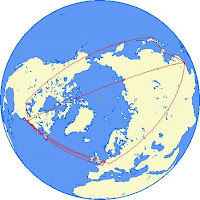
Below are two photos of me wearing the Think Tank Skin kit. The first photo is of me wearing the Skin kit as it is intended to be worn, which is ideal for climbing. The second photo is of me wearing the Skin kit the way I usually wear it when shooting, which is having the kit strapped to my right hip. Along with these two photos is a photo of a 'rough map' of where my Think Tank Skin Set has flown since I received it less than two months ago.
Happy Flying!
--Click Images Below To Enlarge Them--


9/06/2008 – Think Tank Skin Pouch & Belt System : Light, Easy & Simple Solution For Traveling With Your Camera Gear
It's no secret that I like to travel quick and light. I am always searching for better ways to bring more equipment, in less space, in a more comfortable manner. For years I used the Newswear belt system and pouches, for a light and compact travel. The Newswear Pouches are rugged, well designed, unpadded and met most of my needs. I often wished there was a "Newswear on steroids" pouch system that met my basic requirements, but gave me that "5%" more I was seeking, the solution to my needs has now been found in the Think Tank Skin pouch system.
I received my Think Tank Skin Set in April, and now a little less than two months after affixing four of the pouches to the Think Tank "Belly Dancer" belt/suspenders, this kit has now flow with me for approximately 45,000 miles. In this short amount of time I have tested the Think Tank Skin pouches, and belt/suspender, system in Frankfurt, Paris, Amsterdam, Incheon, Beijing, Hong Kong (twice), Philadelphia, New York, Boston and Washington DC. After all this travel I can safely say I love this system!
My 'kit' of the Think Tank Skin Set consists of the Skin Strobe, Skin 50, Skin 75 and Skin Chimp Cage. These four pouches allow me not only the ability to carry what I need, but also carry it very comfortably and protect it from the elements.
The design of the Skin pouches is simple. The interiors of the larger pouches have Velcro interiors with supplied dividers. This allows you to custom configure your interior to your specific needs. The oversized closure-flap has an exterior zip pocket that is ideal for "AA" batteries, smaller camera batteries, lens caps (the exterior pocket of my Skin Chimp Cage holds a Manfrotto 3007 compact table-top tripod and extension post!)
On the exterior of the pouch, but still covered by the closure-flap is an open 'drop pocket' with Velcro closure. These pocket has been great for larger batteries, such as Canon 1D batteries, ETTL flash cords and the all import need to carry candy bars that you can access and eat quickly while you shoot (WARNING: To not place Cadbury Crunchie Bars between a long lens in the pouch and "AA" batteries in the flap, the delicate nature of the Crunchie Bars they will crumble!)
A brilliant feature of the Think Tank Skin pouches is the ability to 'eliminate' the Velcro sound from the opening and closing of the top flap. This feature has come in extremely handy while shooting weddings. While working in small intimate ceremonies in both Paris and Boston I loved being able to work out of my pouches without the need to go hide in a corner while opening my pouch flaps. The interior Velcro can be flipped 'closed' leaving the pouch flaps 'unlocked,' but allowing the freedom to work in and out of your pouches without fear of everyone staring at you when you reach for a lens. This ability to silence the opening and closing of your pouches is really a great feature for not only wedding photographers, but also corporate and political photographers as well.
One very subtle feature of the Skin pouches often seems to go unnoticed by those who use the system until the need to use it.....the attached sealed rain cover! I had not paid attention to this important feature until I walked outside into a driving rain in Washington DC. This included feature is fantastic!
My kit is attached to the Think Tank Skin "Belly Dancer belt/suspender system. At first I didn't think I'd like the Belly Dancer. While I loved the Newswear Belt System, I was not a fan of the Chest-Vest system. With the Belly Dancer I have found my own way of wearing the system. Occasionally I wear the system as "suspenders" with the pouches in front, however I find I more commonly wear the Skin Set on my right hip, with the strap on my right shoulder and the buckle clipped on my left hip.
I find wearing the Skin Set on my hip gives me not only more comfort for how I work, but I also have less "odd looks" when wearing it in places like airports, or while shooting subjects in front of 'sensitive buildings' such as an Embassy or large public facility like a train station. The less I get watched by security while I am working, the less I am likely to be approached, and thus the more time and less hassle I have to create the images I am seeking to create.
Had I designed a pouch set for myself, to meet my specific needs of not only shooting, but also traveling with all my equipment as carry-on baggage only, I could not have designed a more desirable kit than the Think Tank Skin Set.
.......Stay tuned for tips on how to carry this kit on-board with you when you are limited to one carry one bag!
If you like waist packs (and I still absolutely love my Mountainsmith Tour, this does not replace that set up) and/or you use pouches on a belt system, chances are you'll love this set up!
Below are two photos of me wearing the Think Tank Skin kit. The first photo is of me wearing the Skin kit as it is intended to be worn, which is ideal for climbing. The second photo is of me wearing the Skin kit the way I usually wear it when shooting, which is having the kit strapped to my right hip. Along with these two photos is a photo of a 'rough map' of where my Think Tank Skin Set has flown since I received it less than two months ago.
Happy Flying!
--Click Images Below To Enlarge Them--


29 May 2008
Airport Etiquette : Doing Laps With Your Mobile Phone
Web: www.fishfoto.com -- E-Mail: fish@flyingwithfish.com
29/05/2008 - Airport Etiquette : Doing Laps With Your Mobile Phone
I'm not sure when the practice of 'exercising with your mobile phone' in the airline lounge or at the gate started, but I'm sure it was by an insecure person who wanted to seem important.
At every airport I am in I always see 'this person,' or at times large numbers of 'these people.' You know who these people are, they have their phone glued to their ear, or they hold their phone outright at a 90° angle with their Bluetooth headset in their ear, and walk in the path of as many people as they can while discussing nothing.
I'm not sure what causes someone, who’d normally have certain conversations behind closed doors, or in a low tone at home, to stand up and blast their personal information through a large unsecured area. Not only is this unsafe, as I have heard people mention their names, travel information and credit card information more than once, but it is most importantly rude. No one wants you to wander through their personal space while you discuss whatever it is you are discussing.
Last week while sitting in Alitalia's Michelangelo Lounge, at New York's JFK Int'l Airport I encountered the first of two irritating people with mobile phones for my journey (the next person would be approximately 6,800 miles away, on the other side of the world). The wandering mobile phone user, in the Alitalia Lounge, seemed to find his way into the two-foot gap between the couch I was sitting on and the window behind it. From this gap the man on the phone wandered up and back between other couches speaking at a volume you'd use to talk to someone next to you should you be in the middle of a large stadium concert.
Quietly sitting on the couch in the lounge, trying to read my e-mail, drink a Coke and eat a small sandwich, I’d find myself not caring that this person was upset that they were booked in Alitalia's business class rather than Air France's business class (while I fully agree with his sentiments on Alitalia vs Air France, I was about to take a long-haul flight in economy class); the more this man wandered and spoke at maximum volume I found myself caring even less that he had parked his car in a long term lot that offered car detailing; and I had no interest or tolerance for his long winded discussion on his Chevy Tahoe lease being up and his interest in a new Ford Excursion (and at current fuel prices shouldn't a guy who has no kids, or so I gathered from his rambling right behind me, look for a smaller car?).
A few days after hearing the details of this gentleman's life, which I didn't care about, I found myself sitting briefly in the Air China Business Lounge, in Beijing (PEK). The lounge was fairly empty, but I found a spot near a cluster of seats overlooking the window in a quiet corner. Having just sat down, and begun the process of cruising through my e-mail, an Englishman on his way back to London parked himself in the middle of this small cluster of tables (in an otherwise empty lounge). After a moment of taking off his jacket, opening his laptop and setting his day planner on the table he pulled out his mobile phone and proceeded to have an extremely loud conversation.
I'm not sure what possesses these people, but the Englishman got up and walked four or five circles around those of us who were sitting quietly in our little cluster of tables. The glances back and forth between those of us sitting there quietly indicated that none of us cared about this man's 'busy schedule.' While packing my backpack up I did learn a few interesting things, I learned that this Englishman deals in foreign real-estate, I found out that this guy really hates his brother-in-law and for some reason I managed to be informed that he has dermatologist appointment coming up for a growth of some sort on his right shoulder.
Now I ask you this............if you were either of these two people, would you want the world knowing any of this? Do you need to walk around me, in front of me, behind me, sit next to me and speak in your 'stadium concert' voice?
Next time you have the urge to call your boss, your client, your Mom at the airport, please be courteous, stay in one place and use your normal office phone voice.
Thank you!
Happy Flying!
29/05/2008 - Airport Etiquette : Doing Laps With Your Mobile Phone
I'm not sure when the practice of 'exercising with your mobile phone' in the airline lounge or at the gate started, but I'm sure it was by an insecure person who wanted to seem important.
At every airport I am in I always see 'this person,' or at times large numbers of 'these people.' You know who these people are, they have their phone glued to their ear, or they hold their phone outright at a 90° angle with their Bluetooth headset in their ear, and walk in the path of as many people as they can while discussing nothing.
I'm not sure what causes someone, who’d normally have certain conversations behind closed doors, or in a low tone at home, to stand up and blast their personal information through a large unsecured area. Not only is this unsafe, as I have heard people mention their names, travel information and credit card information more than once, but it is most importantly rude. No one wants you to wander through their personal space while you discuss whatever it is you are discussing.
Last week while sitting in Alitalia's Michelangelo Lounge, at New York's JFK Int'l Airport I encountered the first of two irritating people with mobile phones for my journey (the next person would be approximately 6,800 miles away, on the other side of the world). The wandering mobile phone user, in the Alitalia Lounge, seemed to find his way into the two-foot gap between the couch I was sitting on and the window behind it. From this gap the man on the phone wandered up and back between other couches speaking at a volume you'd use to talk to someone next to you should you be in the middle of a large stadium concert.
Quietly sitting on the couch in the lounge, trying to read my e-mail, drink a Coke and eat a small sandwich, I’d find myself not caring that this person was upset that they were booked in Alitalia's business class rather than Air France's business class (while I fully agree with his sentiments on Alitalia vs Air France, I was about to take a long-haul flight in economy class); the more this man wandered and spoke at maximum volume I found myself caring even less that he had parked his car in a long term lot that offered car detailing; and I had no interest or tolerance for his long winded discussion on his Chevy Tahoe lease being up and his interest in a new Ford Excursion (and at current fuel prices shouldn't a guy who has no kids, or so I gathered from his rambling right behind me, look for a smaller car?).
A few days after hearing the details of this gentleman's life, which I didn't care about, I found myself sitting briefly in the Air China Business Lounge, in Beijing (PEK). The lounge was fairly empty, but I found a spot near a cluster of seats overlooking the window in a quiet corner. Having just sat down, and begun the process of cruising through my e-mail, an Englishman on his way back to London parked himself in the middle of this small cluster of tables (in an otherwise empty lounge). After a moment of taking off his jacket, opening his laptop and setting his day planner on the table he pulled out his mobile phone and proceeded to have an extremely loud conversation.
I'm not sure what possesses these people, but the Englishman got up and walked four or five circles around those of us who were sitting quietly in our little cluster of tables. The glances back and forth between those of us sitting there quietly indicated that none of us cared about this man's 'busy schedule.' While packing my backpack up I did learn a few interesting things, I learned that this Englishman deals in foreign real-estate, I found out that this guy really hates his brother-in-law and for some reason I managed to be informed that he has dermatologist appointment coming up for a growth of some sort on his right shoulder.
Now I ask you this............if you were either of these two people, would you want the world knowing any of this? Do you need to walk around me, in front of me, behind me, sit next to me and speak in your 'stadium concert' voice?
Next time you have the urge to call your boss, your client, your Mom at the airport, please be courteous, stay in one place and use your normal office phone voice.
Thank you!
Happy Flying!
27 May 2008
Southwest Airlines Addresses The Airline "Nickel & Dime" Game
Web: www.fishfoto.com -- E-Mail: fish@flyingwithfish.com
27/05/2008 - Southwest Airlines Addresses The Airline "Nickel & Dime" Game
It's no secret that I like Southwest Airlines. While I tend to only fly Southwest on short-haul and point-to-point flights due to convenience and scheduling, Southwest has fairly consistent policies, (usually) friendly crews and staff, a 'media pre-board' policy and a fantastic on-time record.
When you fly Southwest Airlines you know what you are getting. There is no bait-n-switch. There is no upgrade game, no 'elite lines,' online check in is simple, and while I dislike the airline's new standby policy (and I sincerely hope they change it!) Southwest Airlines has always been the easiest airline to work with as a passenger.
You want pillows, blankets, an in-flight magazine, a soft drink and some pretzels? You've got it! You want an in-flight movie? Bring your own! Worried about an 'equipment swap'? Don't worry, you are guaranteed to end up on a Boeing 737 with a 3-3 seating configuration. .
In a recent television ad produced by Southwest Airlines taking a jab at the legacy airlines, that usually cost more and now offer less-and-less to their flyers, Southwest Airlines has created a very funny commentary.
I've watched the ad a few times and found myself laughing every time. So with the recent discussions about 'legacy airlines' and their growing nickel-and-dime tactics, I wanted to share the new Southwest Airlines ad with the readers of Flying With Fish.
Happy Flying!
--Click Image To Begin Video--
27/05/2008 - Southwest Airlines Addresses The Airline "Nickel & Dime" Game
It's no secret that I like Southwest Airlines. While I tend to only fly Southwest on short-haul and point-to-point flights due to convenience and scheduling, Southwest has fairly consistent policies, (usually) friendly crews and staff, a 'media pre-board' policy and a fantastic on-time record.
When you fly Southwest Airlines you know what you are getting. There is no bait-n-switch. There is no upgrade game, no 'elite lines,' online check in is simple, and while I dislike the airline's new standby policy (and I sincerely hope they change it!) Southwest Airlines has always been the easiest airline to work with as a passenger.
You want pillows, blankets, an in-flight magazine, a soft drink and some pretzels? You've got it! You want an in-flight movie? Bring your own! Worried about an 'equipment swap'? Don't worry, you are guaranteed to end up on a Boeing 737 with a 3-3 seating configuration. .
In a recent television ad produced by Southwest Airlines taking a jab at the legacy airlines, that usually cost more and now offer less-and-less to their flyers, Southwest Airlines has created a very funny commentary.
I've watched the ad a few times and found myself laughing every time. So with the recent discussions about 'legacy airlines' and their growing nickel-and-dime tactics, I wanted to share the new Southwest Airlines ad with the readers of Flying With Fish.
Happy Flying!
--Click Image To Begin Video--
26 May 2008
Do You Have A Visa To Work Here? Ummm....I Live Here (Humour From Real Life)
Web: www.fishfotoworldwide.com -- E-Mail: fish@flyingwithfish.com
26/05/2008 - Do You Have A Visa To Work Here? Ummm....I Live Here (Humour From Real Life)
Yesterday afternoon, after arriving back home at New York's JFK International Airport (JFK), from Beijing (PEK), I deplaned the Air China (CA) flight I had taken home and headed down to the Immigrations Passport Control area. When it was my turn I approached the US Immigrations Officer and handed her my United States issued Passport and "landing card," and what happened next had me stunned.
Before I go further with the unusual events of yesterday's return to the United States, after only being away for 70 hours, I'd like to state this. I have the utmost respect for those who work in the Immigrations, Customs and Border Protection services of not only the United States but also other nations around the world. They have a difficult job of determining who should and should not be allowed into their respective countries.
In my career as a news photographer, I had spent more than 3 years documenting 'homeland security,' both domestically and abroad. I have witnessed some unusual situations, watched some funny moments, and seen agents go extraordinary lengths to catch criminals entering the United States. I also know I have some very odd travel patterns and am accustomed to extra questioning at times. I take it in stride................but the questioning I received yesterday was bizarre.
So on with the story.......I handed my US Passport and 'landing card' to the US Immigrations Officer at the passport control booth and was asked the standard questions of "You were away on business?" I replied, "Yes." The next question is the obvious questions "What do you do?" I replied that I was a photographer and I had been in Hong Kong photographing a wedding. The Immigrations Officer asked me if I worked in the United States and I said "yes." The Immigrations Officer then asked if I was connecting to another flight and I informed her that my family was waiting for me outside and I was headed to my see my parents before heading home (not that I had to tell her that, but I was just making polite conversation).
The next question threw me for a loop. As the Immigrations Officers flipped through my passport pages she asked, "Do you have a visa to work here in the US?" I informed the Immigrations Officer that she was looking at my passport that was issued by the United States, that I was born in New York, and hat I was a US Citizen, as such I require no papers to work in the United States. The Immigrations Officer looked up and glared at me as if I had significantly angered her with my reply. She flipped through my passport pages again and demanded to know if I had a visa or permit hat would allow me to work in the United States. This round or questioning and answering went on for another minute or two.
After a few more back-and-forth words that went nowhere the Immigrations Officer summoned a Supervisor. The Immigrations Supervisor looked confused as to why they were there, once they were informed of the situation, after approaching the Passport Control Booth. The Immigrations Supervisor had my passport in his hand when the Immigrations Officer I had been arguing with stated "He has no visa to work in the United States." At this time the Immigrations Supervisor looked at the cover of my United States Passport with a confused look on his face, he flipped open my Passport, looked at the photo, looked at my face and simply asked "Where are you coming from?" I responded with Hong Kong via Beijing." The Immigrations Supervisor then took the stamper, stamped a page in my passport, flipped the passport shut, handed it to me and said "Welcome Home Sir."
As I walked away from the Passport Control Booth I could see the Immigrations Supervisor closing this lane. Clearly there was a problem with some communications between the Immigrations Officer and the Immigrations Supervisor.
I have no idea what was up with this problem, but I had an easier time entering Beijing twice in under 48hrs and Hong Kong between my two Beijing entries. You'd think I'd have a harder time entering Hong Kong to work than the United States where I am a citizen.
Normally returning to the United States, as a US Citizen consists of less than 1 minute at the Passport Control Booth. Sometimes there is secondary screening, but if and when that occurs it is usually dealt with in 2 or 3 minutes of questions.
..............I was angry yesterday, but now looking back on what transpired I find the incident funny. Both 'sad funny' and 'ha ha funny' (also a bit scary any US Immigrations Officers would think any US Citizen would need a visa to work in their home country) and looking back on the who situation I find myself laughing now.
Below is a photo of my US Passport (notice my "Place of Birth" is New York and my "Nationality" is United States of America......and yes, I have removed some information from my passport to prevent identity theft). Below my passport photo is a photo of the Passport Control Booth at Beijing Capital International Airport, where I managed to clear passport control in with relative ease (although a minor language barrier).
Happy Flying!
--Click Images To Enlarge Them--


26/05/2008 - Do You Have A Visa To Work Here? Ummm....I Live Here (Humour From Real Life)
Yesterday afternoon, after arriving back home at New York's JFK International Airport (JFK), from Beijing (PEK), I deplaned the Air China (CA) flight I had taken home and headed down to the Immigrations Passport Control area. When it was my turn I approached the US Immigrations Officer and handed her my United States issued Passport and "landing card," and what happened next had me stunned.
Before I go further with the unusual events of yesterday's return to the United States, after only being away for 70 hours, I'd like to state this. I have the utmost respect for those who work in the Immigrations, Customs and Border Protection services of not only the United States but also other nations around the world. They have a difficult job of determining who should and should not be allowed into their respective countries.
In my career as a news photographer, I had spent more than 3 years documenting 'homeland security,' both domestically and abroad. I have witnessed some unusual situations, watched some funny moments, and seen agents go extraordinary lengths to catch criminals entering the United States. I also know I have some very odd travel patterns and am accustomed to extra questioning at times. I take it in stride................but the questioning I received yesterday was bizarre.
So on with the story.......I handed my US Passport and 'landing card' to the US Immigrations Officer at the passport control booth and was asked the standard questions of "You were away on business?" I replied, "Yes." The next question is the obvious questions "What do you do?" I replied that I was a photographer and I had been in Hong Kong photographing a wedding. The Immigrations Officer asked me if I worked in the United States and I said "yes." The Immigrations Officer then asked if I was connecting to another flight and I informed her that my family was waiting for me outside and I was headed to my see my parents before heading home (not that I had to tell her that, but I was just making polite conversation).
The next question threw me for a loop. As the Immigrations Officers flipped through my passport pages she asked, "Do you have a visa to work here in the US?" I informed the Immigrations Officer that she was looking at my passport that was issued by the United States, that I was born in New York, and hat I was a US Citizen, as such I require no papers to work in the United States. The Immigrations Officer looked up and glared at me as if I had significantly angered her with my reply. She flipped through my passport pages again and demanded to know if I had a visa or permit hat would allow me to work in the United States. This round or questioning and answering went on for another minute or two.
After a few more back-and-forth words that went nowhere the Immigrations Officer summoned a Supervisor. The Immigrations Supervisor looked confused as to why they were there, once they were informed of the situation, after approaching the Passport Control Booth. The Immigrations Supervisor had my passport in his hand when the Immigrations Officer I had been arguing with stated "He has no visa to work in the United States." At this time the Immigrations Supervisor looked at the cover of my United States Passport with a confused look on his face, he flipped open my Passport, looked at the photo, looked at my face and simply asked "Where are you coming from?" I responded with Hong Kong via Beijing." The Immigrations Supervisor then took the stamper, stamped a page in my passport, flipped the passport shut, handed it to me and said "Welcome Home Sir."
As I walked away from the Passport Control Booth I could see the Immigrations Supervisor closing this lane. Clearly there was a problem with some communications between the Immigrations Officer and the Immigrations Supervisor.
I have no idea what was up with this problem, but I had an easier time entering Beijing twice in under 48hrs and Hong Kong between my two Beijing entries. You'd think I'd have a harder time entering Hong Kong to work than the United States where I am a citizen.
Normally returning to the United States, as a US Citizen consists of less than 1 minute at the Passport Control Booth. Sometimes there is secondary screening, but if and when that occurs it is usually dealt with in 2 or 3 minutes of questions.
..............I was angry yesterday, but now looking back on what transpired I find the incident funny. Both 'sad funny' and 'ha ha funny' (also a bit scary any US Immigrations Officers would think any US Citizen would need a visa to work in their home country) and looking back on the who situation I find myself laughing now.
Below is a photo of my US Passport (notice my "Place of Birth" is New York and my "Nationality" is United States of America......and yes, I have removed some information from my passport to prevent identity theft). Below my passport photo is a photo of the Passport Control Booth at Beijing Capital International Airport, where I managed to clear passport control in with relative ease (although a minor language barrier).
Happy Flying!
--Click Images To Enlarge Them--


24 May 2008
Security Of Checked Baggage : Is There A Better Way?
Web: www.fishfoto.com -- E-Mail: fish@flyingwithfish.com
24/05/2008 - Security Of Checked Baggage : Is There A Better Way?
Last night while watching a line of people check in for the late ANA (NH) flight from Hong Kong (HKG) to Tokyo (HND), I found myself watching one man running tape around his zipper at the check in counter. I don't know if it was to prevent theft or to repair a damaged zipper, but I found myself watching this wondering if this is the simple solutions airlines and the Transportation Security Administration (TSA) must adopt to drastically cut down on thefts from checked baggage in the United States.
Many flyers use locks only to find their zipper as been jammed open with a knife and re-zipped, the locks have been opened with TSA 'Sentry' keys or the lock has been completely cut off. The frustration passengers feel when their bag arrives missing items they know they had checked, is massive. The answers to stopping baggage theft have become an impossible series of finger pointing situations between airlines and the TSA, which further frustrate flyer. In the end the lack of security of the contents of bags, under the noses of the federalized baggage screening process make both the TSA and the airlines look untrustworthy.
My solution is this...........ready for it?...........Simple paper based tape that is perforated with a stamped with a date stamp from the originating airport. The TSA currently places a small sticker on your checked bag's baggage tag that states your bag has been x-rayed. I say do away with this sticker and use a paper based perforated tape that encircles the bag and place the date on that piece of tape in one or two locations. Each TSA agent should be issued their own stamp with their badge number on the stamper. By personalizing the stamps they cannot easily be replicated and passed around (such as the lack of security of obtaining a set of TSA 'Sentry Lock" keys).
Once a piece of paper tape is torn, can never be repaired. Shipping warehouses have been using paper tape for years to prove if a package has or has not been tampered with. This way if a bag has been tampered with a passenger has a greater chance of knowing immediately upon retrieving their bags.
Paper based tape is low cost, low tech and highly effective. On a low-volume purchase, a case of paper tape costs approximately US$168 per case of heavy strength tape, a case of tape comes with 72 rolls, at 2"x55 yards. approximately 1 yard per bag, comes to around US$0.04 per bag. With the bulk the TSA would be buying these rolls of tape in I'm sure the cost would drop lower than $0.04. Stampers in bulk run about $6 per stamper, less expensive than the new "flashlights" in use at check points, and the costs will still be less than the new shift from "white uniforms to the new "blue uniforms" that can currently be seen at Baltimore/Washington International Airport (BWI).
With all the taxes and fees that passengers who fly within, through, or from the United States are forced to pay, I don't see spending $0.04 per bag as such a financial burden.......if even with the rising costs of fuel.
Just a potentially simple solution that costs pennies per-bag to put into action.
Happy Flying!
24/05/2008 - Security Of Checked Baggage : Is There A Better Way?
Last night while watching a line of people check in for the late ANA (NH) flight from Hong Kong (HKG) to Tokyo (HND), I found myself watching one man running tape around his zipper at the check in counter. I don't know if it was to prevent theft or to repair a damaged zipper, but I found myself watching this wondering if this is the simple solutions airlines and the Transportation Security Administration (TSA) must adopt to drastically cut down on thefts from checked baggage in the United States.
Many flyers use locks only to find their zipper as been jammed open with a knife and re-zipped, the locks have been opened with TSA 'Sentry' keys or the lock has been completely cut off. The frustration passengers feel when their bag arrives missing items they know they had checked, is massive. The answers to stopping baggage theft have become an impossible series of finger pointing situations between airlines and the TSA, which further frustrate flyer. In the end the lack of security of the contents of bags, under the noses of the federalized baggage screening process make both the TSA and the airlines look untrustworthy.
My solution is this...........ready for it?...........Simple paper based tape that is perforated with a stamped with a date stamp from the originating airport. The TSA currently places a small sticker on your checked bag's baggage tag that states your bag has been x-rayed. I say do away with this sticker and use a paper based perforated tape that encircles the bag and place the date on that piece of tape in one or two locations. Each TSA agent should be issued their own stamp with their badge number on the stamper. By personalizing the stamps they cannot easily be replicated and passed around (such as the lack of security of obtaining a set of TSA 'Sentry Lock" keys).
Once a piece of paper tape is torn, can never be repaired. Shipping warehouses have been using paper tape for years to prove if a package has or has not been tampered with. This way if a bag has been tampered with a passenger has a greater chance of knowing immediately upon retrieving their bags.
Paper based tape is low cost, low tech and highly effective. On a low-volume purchase, a case of paper tape costs approximately US$168 per case of heavy strength tape, a case of tape comes with 72 rolls, at 2"x55 yards. approximately 1 yard per bag, comes to around US$0.04 per bag. With the bulk the TSA would be buying these rolls of tape in I'm sure the cost would drop lower than $0.04. Stampers in bulk run about $6 per stamper, less expensive than the new "flashlights" in use at check points, and the costs will still be less than the new shift from "white uniforms to the new "blue uniforms" that can currently be seen at Baltimore/Washington International Airport (BWI).
With all the taxes and fees that passengers who fly within, through, or from the United States are forced to pay, I don't see spending $0.04 per bag as such a financial burden.......if even with the rising costs of fuel.
Just a potentially simple solution that costs pennies per-bag to put into action.
Happy Flying!
23 May 2008
23/05/2008-Weekly Roundup: Safer Airline Seats? Flying With Fish Airs On TV!, Navigating Airport Security, American Airlines Nickel-&-Diming Bags
Web: www.fishfotoworldwide.com -- E-Mail: fish@flyingwithfish.com
23/05/2008-Weekly Roundup: Safer Airline Seats? Flying With Fish Airs On TV!, Navigating Airport Security, American Airlines Nickel-&-Diming Bags
This week’s Weekly Round Up is being written from Hong Kong International Airport's Terminal 2 (HKG), with a slightly stiff neck and semi-sore lower back, after 18 hours traveling from New York's JFK Airport (JFK) to Beijing Capital International Airport (PEK) , and Beijing to Hong Kong in the back of the plane.
Some people have accused me of losing touch with the "real flying experience," however this is not so. I fly all economy airlines, such as Southwest Airlines and United Airlines's "Ted" often, and fly many of my back-to-back North American transcontinental flights in 'the back.' This weekend I will fly more than 16,000 miles round-trip in 70 hours, while working for 18 hours during my brief time on the ground, and do all my flying in Air China's economy class. I have logged hundreds of thousands of miles cramped into narrow economy class seats on regional jets, turbo-props (my 'home' airport only flies turbo-props) and flown many long-haul flights in barely padded seats with no legroom.
When I say I feel your pain...trust me, I feel the pain of the "real flying experience."
This past week on Flying With Fish I addressed a question of choosing airline seats based on 'safety." In my opinion, all seats are equally as prone to risks should there be a "situation." One reader of Flying With Fish quoted an MSN/Best Life article on seat safety that lists seats specifically by row/seat according to different aircraft types. This article (which can be found in the comments section of my post) lists it's information is written by a well-known travel writer, who bases his opinions on "personal experience", not evidence. I have to wonder how many airliner crashes this person has been in for "personal experience." What makes the MSN/Best Life article even more confusing for potential flyers is that it lists rows/seats that are only in relation to a specific airline and it's seat configuration on one-type of aircraft. Some airlines have multiple seating configurations for the same aircraft, which makes the entire article's information not only baseless but also useless. You can read up on this subject at: 19/05/2008 - Are Some Seats On The Plane Safer Than Others?
This week I introduced the readers of Flying With Fish to a "Month In The Life." This look back at my last month of travel was posted on the same day I appeared on Good Morning America (I hope to have a clip on YouTube shortly, but you can read it here www.FishOnGMA.notlong.com), and takes you through 32,000+ miles traveled, 7 countries and 11 cities (well 10 cities and me sleeping in 1 city). One reader questioned this last photo in a "Month In The Life," asking how I can preach security yet leave a camera out on a timer. The answer is simple, my bags were all locked and secured to bar on the floor a few inches in front of the bench I was laying on. The camera I used to shoot me sleeping was placed inside a locked PacSafe 55. This camera, inside the PacSafe 55 was locked inside an open public locker at Amsterdam-Schiphol International Airport. This is how I can preach securing your bags, and property, and still create these types of images with my gear being secured. You can see the photos and read up on my "Month In The Life" here:
20/05/2008 - A Month In The Life Of A Flying Fish
I am frequently asked to detail step-for-step my procedure for securing my property, while maintaining my ability to quickly get through a TSA checkpoint. Having sent off a detailed response to more than 400 people since the start of the year I thought it might be time just to post it on Flying With Fish. So, for my detailed step by step procedures for getting through security checkpoints hassle free and problem free read this:
21/05/2008 - Airport Security Screening System : Get Through Security With Ease & Safety
This week on Flying With Fish ended with American Airlines announcing it would begin charging $15 for the first single checked bag on all US Domestic routes, with increasing charges after the first bag. This is not acceptable for an airline that often has some of the most expensive fares in the sky. American Airlines, a 'Legacy Carrier,' currently the largest airline in the United States, is now employing tactics not even used by Low Cost Carriers (except Spirit Airline in the U.S.). American Airlines' new baggage policy takes he top position in the Nickle-and-Diming of flyers, hands down. To read more about American Airlines is further blurring the lines between 'Legacy Carriers' and 'Low Cost Carriers' please check here: 22/05/2008 - American Airlines' New Baggage Policy: Is There A Line Between Legacy Airlines & Low Cost Carriers Anymore?
I'm going to wrap up this Weekly Round Up with a photo I shot around 11:00pm (GMT+8), I'm guessing I was somewhere over (or around) Shenzhen, between Beijing and Hong Kong. We had a lightening storm shortly after the wheels went up, it was bumpy, but beautiful, followed by a big beautiful moon shining in my window in seat 29A for the flight...I know the photo does not do the view justice, but it made me smile.
Happy Flying!
--Click Image To Enlarge It--

23/05/2008-Weekly Roundup: Safer Airline Seats? Flying With Fish Airs On TV!, Navigating Airport Security, American Airlines Nickel-&-Diming Bags
This week’s Weekly Round Up is being written from Hong Kong International Airport's Terminal 2 (HKG), with a slightly stiff neck and semi-sore lower back, after 18 hours traveling from New York's JFK Airport (JFK) to Beijing Capital International Airport (PEK) , and Beijing to Hong Kong in the back of the plane.
Some people have accused me of losing touch with the "real flying experience," however this is not so. I fly all economy airlines, such as Southwest Airlines and United Airlines's "Ted" often, and fly many of my back-to-back North American transcontinental flights in 'the back.' This weekend I will fly more than 16,000 miles round-trip in 70 hours, while working for 18 hours during my brief time on the ground, and do all my flying in Air China's economy class. I have logged hundreds of thousands of miles cramped into narrow economy class seats on regional jets, turbo-props (my 'home' airport only flies turbo-props) and flown many long-haul flights in barely padded seats with no legroom.
When I say I feel your pain...trust me, I feel the pain of the "real flying experience."
This past week on Flying With Fish I addressed a question of choosing airline seats based on 'safety." In my opinion, all seats are equally as prone to risks should there be a "situation." One reader of Flying With Fish quoted an MSN/Best Life article on seat safety that lists seats specifically by row/seat according to different aircraft types. This article (which can be found in the comments section of my post) lists it's information is written by a well-known travel writer, who bases his opinions on "personal experience", not evidence. I have to wonder how many airliner crashes this person has been in for "personal experience." What makes the MSN/Best Life article even more confusing for potential flyers is that it lists rows/seats that are only in relation to a specific airline and it's seat configuration on one-type of aircraft. Some airlines have multiple seating configurations for the same aircraft, which makes the entire article's information not only baseless but also useless. You can read up on this subject at: 19/05/2008 - Are Some Seats On The Plane Safer Than Others?
This week I introduced the readers of Flying With Fish to a "Month In The Life." This look back at my last month of travel was posted on the same day I appeared on Good Morning America (I hope to have a clip on YouTube shortly, but you can read it here www.FishOnGMA.notlong.com), and takes you through 32,000+ miles traveled, 7 countries and 11 cities (well 10 cities and me sleeping in 1 city). One reader questioned this last photo in a "Month In The Life," asking how I can preach security yet leave a camera out on a timer. The answer is simple, my bags were all locked and secured to bar on the floor a few inches in front of the bench I was laying on. The camera I used to shoot me sleeping was placed inside a locked PacSafe 55. This camera, inside the PacSafe 55 was locked inside an open public locker at Amsterdam-Schiphol International Airport. This is how I can preach securing your bags, and property, and still create these types of images with my gear being secured. You can see the photos and read up on my "Month In The Life" here:
20/05/2008 - A Month In The Life Of A Flying Fish
I am frequently asked to detail step-for-step my procedure for securing my property, while maintaining my ability to quickly get through a TSA checkpoint. Having sent off a detailed response to more than 400 people since the start of the year I thought it might be time just to post it on Flying With Fish. So, for my detailed step by step procedures for getting through security checkpoints hassle free and problem free read this:
21/05/2008 - Airport Security Screening System : Get Through Security With Ease & Safety
This week on Flying With Fish ended with American Airlines announcing it would begin charging $15 for the first single checked bag on all US Domestic routes, with increasing charges after the first bag. This is not acceptable for an airline that often has some of the most expensive fares in the sky. American Airlines, a 'Legacy Carrier,' currently the largest airline in the United States, is now employing tactics not even used by Low Cost Carriers (except Spirit Airline in the U.S.). American Airlines' new baggage policy takes he top position in the Nickle-and-Diming of flyers, hands down. To read more about American Airlines is further blurring the lines between 'Legacy Carriers' and 'Low Cost Carriers' please check here: 22/05/2008 - American Airlines' New Baggage Policy: Is There A Line Between Legacy Airlines & Low Cost Carriers Anymore?
I'm going to wrap up this Weekly Round Up with a photo I shot around 11:00pm (GMT+8), I'm guessing I was somewhere over (or around) Shenzhen, between Beijing and Hong Kong. We had a lightening storm shortly after the wheels went up, it was bumpy, but beautiful, followed by a big beautiful moon shining in my window in seat 29A for the flight...I know the photo does not do the view justice, but it made me smile.
Happy Flying!
--Click Image To Enlarge It--

22 May 2008
American Airlines' New Baggage Policy : Is There A Line Between Legacy Airlines & Low Cost Carriers Anymore?
Web: www.fishfoto.com -- E-Mail: fish@flyingwithfish.com
22/05/2008 - American Airlines' New Baggage Policy : Is There A Line Between Legacy Airlines & Low Cost Carriers Anymore?
Over the past few years the line between "Legacy Airlines" and "Low Cost Carries" (LCC) have been blurring. Yesterday American Airlines (AA) made an announcement that has further removed the barrier between a Legacy Airline and the LCCs operating in the United States.
Before I delve further into American Airlines stunning move in the US commercial airline market, let me quickly define what a "Legacy Airline" and an LCC are.
Legacy Airlines are those that flew interstate routes prior to the 1978 Airline Deregulation Act. There are currently 8 of these airlines operating in the United States, and once Delta (DL) and Northwest (NW) complete their merger there will be 7 left.
Low Cost Carriers (LCC) are discount airlines; they tend to operate with a lower operating structure than the Legacy Carriers. LCCs are most famous for being 'no frills.'
.......so what is American Airlines' stunning move? They announced that they would be implementing a $15 baggage fee for passengers FIRST checked bag, each way, as of June 15th 2008. Need to check two bags? Be prepared to hand over $40 each way for your bags to fly with you. (American Airlines is not charging baggage fees on full-fare tickets, for "elite flyers" and international routes. )
While airlines stared to charge $25 for a second checked bag to make up for losses earlier this year, charging for your first checked bag is one of the worst cases of passengers being nickel-and-dimed by a major airline.
Before you point out that some European LCCs have charged for any checked baggage for quite some time now (and that Spirit Airlines in the US charges for all checked bags), keep in mind that you can get fares as low as €1 + tax on some routes, whereas I tend to find American Airlines one of the most expensive airlines to fly with in the United States.
When you fly an LCC you expect to pay for everything. When you pay less than $100 for a flight of more than 1,000 miles, as I have seen available on Spirit Airlines web site quite a few times, you can shell out the baggage fee, expect a "BOB Meal" (BOB = Buy On Board) and the little missing frills.
Let's compare flight costs.
Looking at Spirit Airlines, flying from Chicago O'Hare (ORD) to Ft. Lauderdale/Hollywood International Airport (FLL), departing on June 5 returning on June 9th, morning departure, evening return, I get a fare of $208 + tax.
Looking at American Airlines flying from Chicago O'Hare (ORD) to Miami International Airport (since MIA is an AA Hub), departing on June 5 returning on June 9th, morning departure, evening return, I get a fare of $668 + tax.
Both airlines serve 'BOB' meals, both airlines now charge for checked bags, neither airline offers me any great advantage over the other, so what does AA offer me for the additional $460? For a savings of $460 I am willing to pay Spirit Airlines for my bags, a sandwich and a soft-drink, I'll still be ahead around $425!
With the loss of perks on most legacy carriers, such as the charging for bags, the removal of movies on some routes, the elimination of in-flight meals, the elimination of pillows on some airlines (Southwest Airlines, the largest and most profitable LCC in the world, still offers both pillows and blankets!) and some carriers changing their operations to move closely match those of LCCs, I have to ask what separates one set of airlines from another? (I'll save that question for another entry on Flying With Fish)
My advice for everyone else? Learn to pack light, learn to pack in legal carry on, learn to use the reservations systems to shop your fares and say "NO!" to these practices by airlines.
Happy Flying!
22/05/2008 - American Airlines' New Baggage Policy : Is There A Line Between Legacy Airlines & Low Cost Carriers Anymore?
Over the past few years the line between "Legacy Airlines" and "Low Cost Carries" (LCC) have been blurring. Yesterday American Airlines (AA) made an announcement that has further removed the barrier between a Legacy Airline and the LCCs operating in the United States.
Before I delve further into American Airlines stunning move in the US commercial airline market, let me quickly define what a "Legacy Airline" and an LCC are.
Legacy Airlines are those that flew interstate routes prior to the 1978 Airline Deregulation Act. There are currently 8 of these airlines operating in the United States, and once Delta (DL) and Northwest (NW) complete their merger there will be 7 left.
Low Cost Carriers (LCC) are discount airlines; they tend to operate with a lower operating structure than the Legacy Carriers. LCCs are most famous for being 'no frills.'
.......so what is American Airlines' stunning move? They announced that they would be implementing a $15 baggage fee for passengers FIRST checked bag, each way, as of June 15th 2008. Need to check two bags? Be prepared to hand over $40 each way for your bags to fly with you. (American Airlines is not charging baggage fees on full-fare tickets, for "elite flyers" and international routes. )
While airlines stared to charge $25 for a second checked bag to make up for losses earlier this year, charging for your first checked bag is one of the worst cases of passengers being nickel-and-dimed by a major airline.
Before you point out that some European LCCs have charged for any checked baggage for quite some time now (and that Spirit Airlines in the US charges for all checked bags), keep in mind that you can get fares as low as €1 + tax on some routes, whereas I tend to find American Airlines one of the most expensive airlines to fly with in the United States.
When you fly an LCC you expect to pay for everything. When you pay less than $100 for a flight of more than 1,000 miles, as I have seen available on Spirit Airlines web site quite a few times, you can shell out the baggage fee, expect a "BOB Meal" (BOB = Buy On Board) and the little missing frills.
Let's compare flight costs.
Looking at Spirit Airlines, flying from Chicago O'Hare (ORD) to Ft. Lauderdale/Hollywood International Airport (FLL), departing on June 5 returning on June 9th, morning departure, evening return, I get a fare of $208 + tax.
Looking at American Airlines flying from Chicago O'Hare (ORD) to Miami International Airport (since MIA is an AA Hub), departing on June 5 returning on June 9th, morning departure, evening return, I get a fare of $668 + tax.
Both airlines serve 'BOB' meals, both airlines now charge for checked bags, neither airline offers me any great advantage over the other, so what does AA offer me for the additional $460? For a savings of $460 I am willing to pay Spirit Airlines for my bags, a sandwich and a soft-drink, I'll still be ahead around $425!
With the loss of perks on most legacy carriers, such as the charging for bags, the removal of movies on some routes, the elimination of in-flight meals, the elimination of pillows on some airlines (Southwest Airlines, the largest and most profitable LCC in the world, still offers both pillows and blankets!) and some carriers changing their operations to move closely match those of LCCs, I have to ask what separates one set of airlines from another? (I'll save that question for another entry on Flying With Fish)
My advice for everyone else? Learn to pack light, learn to pack in legal carry on, learn to use the reservations systems to shop your fares and say "NO!" to these practices by airlines.
Happy Flying!
Subscribe to:
Posts (Atom)